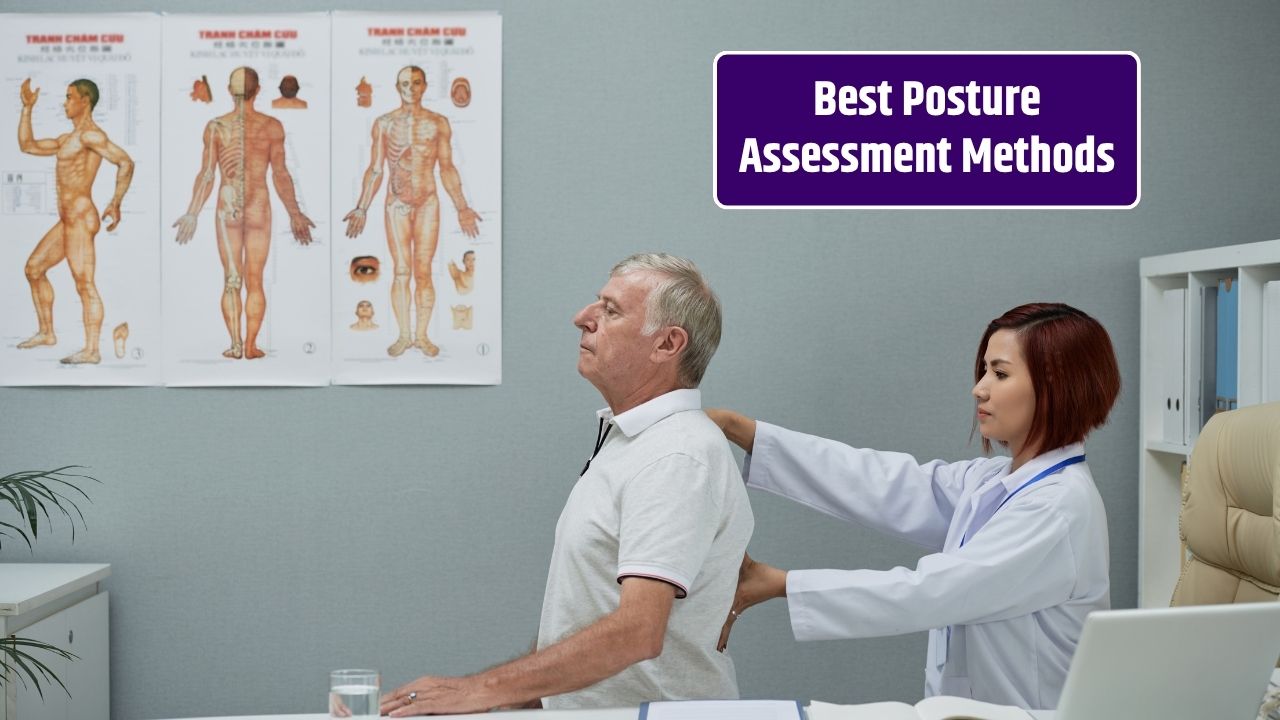
Posture is more than just how you look when you stand or sit—it’s a key indicator of your musculoskeletal health. In biomechanical clinics, postural assessments are essential for diagnosing dysfunction, preventing injury, and tailoring rehabilitation programs. Thanks to advances in technology and movement science, clinicians now use a combination of traditional and high-tech tools to measure posture with accuracy and insight.
Here’s a breakdown of the top postural assessment tools used in biomechanical clinics and how they help improve patient outcomes.
1. Plumb Line Assessment
What It Is:

A simple but effective visual method using a vertical line (usually a string with a weight) to assess alignment.
Used For:
- Identifying anterior/posterior and lateral deviations
- Assessing head, shoulder, spine, hip, and knee alignment
Biomechanical Benefit:
Gives a baseline understanding of weight distribution and spinal symmetry.
2. Posture Grids and Wall Charts
What It Is:
Grids or background charts placed behind the patient while standing to observe alignment against straight vertical and horizontal lines.
Used For:
- Visual tracking of spinal curvature and head tilt
- Documenting progress over time
Biomechanical Benefit:

Helps therapists visually quantify postural shifts in different planes.
3. Digital Posture Analysis Software
What It Is:
Software that analyzes posture using 2D or 3D images from digital cameras or smartphones.
Examples:
- PostureScreen Mobile
- SpinePosture Analyzer
- BodyAlign Pro
Used For:
- Measuring joint angles and alignment
- Providing visual feedback and reports
Biomechanical Benefit:
Allows precise and reproducible measurements to monitor changes and guide corrective programs.
4. 3D Motion Capture Systems
What It Is:

Advanced systems that track body movement in real time using infrared cameras and reflective markers.
Examples:
- Vicon
- Qualisys
- Noraxon
Used For:
- Full-body biomechanical analysis
- Dynamic posture and gait assessment
Biomechanical Benefit:
Captures how posture changes during movement, not just in static positions—essential for athletes or injury rehab.
5. Force Plates and Pressure Mapping Systems
What It Is:
Platforms that measure the distribution of pressure and force under the feet when standing or moving.
Examples:
- Tekscan
- Zebris
- AMTI Force Platforms
Used For:
- Identifying weight shifts or limb dominance
- Evaluating balance and postural sway
Biomechanical Benefit:
Reveals how asymmetrical loading affects posture and may contribute to pain or injury.
6. Inclinometers and Goniometers
What It Is:
Handheld tools used to measure joint angles and spinal curves.
Used For:
- Measuring forward head posture, pelvic tilt, and spinal deviations
- Tracking improvements in flexibility and alignment
Biomechanical Benefit:
Provides objective data on range of motion and segmental alignment.
7. Wearable Sensors and IMUs (Inertial Measurement Units)
What It Is:
Wireless devices that attach to the body and track movement and posture throughout the day.
Examples:
- DorsaVi
- Kinetisense
- Motus
Used For:
- Real-time posture feedback
- Long-term posture monitoring in natural settings
Biomechanical Benefit:
Helps track and correct habitual postural faults during work, exercise, or daily tasks.
8. Functional Movement Screens (FMS)
What It Is:
A standardized screening tool that evaluates dynamic posture during specific movement patterns.
Used For:
- Identifying weak links in the kinetic chain
- Assessing movement quality in squats, lunges, and overhead reach
Biomechanical Benefit:
Connects posture with functional performance, guiding exercise prescription.
Table: Postural Assessment Tools and Their Clinical Uses
| Tool | Primary Use | Biomechanical Insight |
|---|---|---|
| Plumb line | Basic alignment check | Head-to-toe posture deviations |
| Posture grid/chart | Visual feedback | Spinal curvature, head tilt |
| Digital analysis software | Joint angle measurement | Static alignment tracking |
| 3D motion capture | Movement-based posture analysis | Postural shifts during dynamic tasks |
| Force plates/pressure maps | Balance and load distribution | Ground reaction forces and asymmetry |
| Inclinometers/goniometers | Joint and spine angle measurement | Segmental postural deviations |
| Wearable sensors (IMUs) | Daily posture tracking | Real-time feedback in natural settings |
| Functional movement screen | Posture during movement | Movement quality and compensation |
FAQs
Why is postural assessment important in biomechanics?
Because posture influences how forces are transmitted through your body. Poor alignment increases stress on joints and muscles, leading to pain or dysfunction.
Can posture assessments help prevent injuries?
Yes. Identifying imbalances early allows for corrective action, reducing the risk of overuse or movement-related injuries.
Do high-tech tools provide better results?
They offer more detailed data and reproducibility, especially for tracking progress—but low-tech tools still provide valuable insights, especially in primary care or rehab settings.