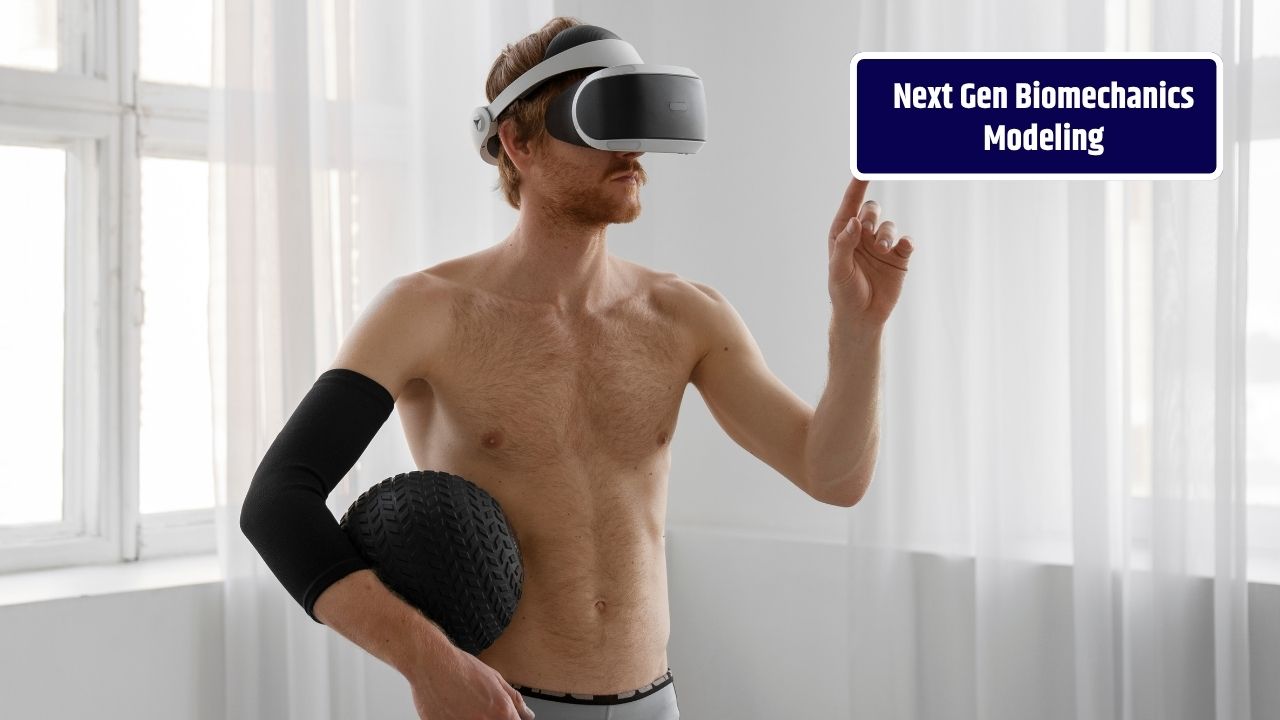
Musculoskeletal modeling and simulation have become essential tools in biomechanics, physical therapy, sports science, and orthopedics. As of 2025, rapid advances in computational power, AI integration, and wearable tech are transforming how researchers and clinicians analyze human movement and joint mechanics. These technologies help visualize and predict internal forces, muscle activity, and skeletal motion—without invasive procedures.
Here’s a breakdown of the latest trends shaping musculoskeletal modeling and simulation today.
What Is Musculoskeletal Modeling?

Musculoskeletal modeling is the process of creating computerized representations of the human body—bones, muscles, tendons, and joints—to simulate how it moves and responds to physical forces. These simulations help estimate joint loads, muscle forces, and energy expenditure during different activities.
Modern simulation platforms (e.g., OpenSim, AnyBody, SIMM) allow researchers to test hypotheses, improve implant designs, and even personalize treatment plans—all in a virtual environment.
Key Trends in Musculoskeletal Modeling in 2025
| Trend | Description |
|---|---|
| Personalized Modeling | Patient-specific anatomy from imaging (MRI, CT, 3D scans) |
| AI-Powered Simulations | Machine learning accelerates model predictions and reduces computation time |
| Wearable Data Integration | Real-world motion and EMG data feed into models for more accurate inputs |
| Real-Time Simulations | On-the-fly feedback for clinical and training applications |
| Multiscale Modeling | Combines tissue-level and joint-level mechanics in a single model |
| Cloud-Based Platforms | Remote collaboration, easier access to computing resources |
These trends are making musculoskeletal simulations faster, more accurate, and more clinically relevant.
Personalized, Patient-Specific Models

One of the most impactful shifts is the move toward customized anatomical models. Using medical imaging, clinicians can build simulations that reflect a patient’s unique bone geometry, muscle mass, and joint alignment.
Benefits of Personalization:
- Improved surgical planning (e.g., joint replacements, spinal fusions)
- More accurate rehabilitation protocols
- Better prediction of injury risk or treatment outcomes
This has particular value in orthopedics, where one-size-fits-all solutions often fall short.
Machine Learning Meets Biomechanics
AI is now used to predict muscle forces and joint loads without running lengthy inverse dynamics calculations. These “data-driven” models can learn from thousands of prior simulations, creating shortcuts that dramatically speed up the process.

Use cases include:
- Injury prediction in sports
- Real-time joint stress analysis during rehab
- Automated gait classification
As models get smarter, they become more accessible to non-experts, including clinicians and trainers.
Wearables + Simulation = Real-World Insight
Wearables like IMUs, smart insoles, and portable EMG systems are making it possible to collect movement data outside the lab. This data can then be streamed into simulation software to model how muscles and joints behave in real-world scenarios—on the field, in a workplace, or at home.
Benefits include:
- Monitoring recovery after surgery or injury
- Customizing athletic training to prevent overuse injuries
- Evaluating ergonomics for occupational health
This fusion of hardware and software is making biomechanics more dynamic and real-time.
Multiscale and Multiphysics Modeling
Researchers are building multiscale models that go beyond joints and muscles to simulate:
- Tendon and ligament strain
- Cartilage wear and tear
- Cellular response to loading
These models integrate physics from different scales—microscopic to macroscopic—to better understand conditions like osteoarthritis, tendon ruptures, or stress fractures.
Real-Time and Predictive Applications
As processing speeds increase, real-time simulation is becoming viable. Rehab clinics and sports centers are beginning to use simulations that provide instant feedback on movement patterns, helping patients or athletes adjust in the moment.
Example Applications:
- Biofeedback for stroke rehab
- Running gait corrections for injury prevention
- Dynamic testing of prosthetic alignment
Real-time modeling is a major step toward interactive biomechanics, where simulation directly informs physical performance.
Cloud Computing and Collaborative Modeling
Cloud-based platforms allow teams across institutions to:
- Share and refine models collaboratively
- Run large-scale simulations without local computing power
- Publish open-access model libraries
Platforms like OpenSim and SCONE now support cloud workflows, accelerating academic and clinical innovation.
FAQs
How accurate are musculoskeletal simulations?
When personalized and validated with data, simulations can be highly accurate. However, simplifications (e.g., muscle routing, joint assumptions) still affect precision.
What software is used in musculoskeletal modeling?
Popular platforms include OpenSim, AnyBody, SIMM, SCONE, and custom MATLAB-based models.
Can these models be used in clinical decision-making?
Yes. Many orthopedic surgeons, physical therapists, and prosthetists now use simulation tools to support patient-specific treatments.