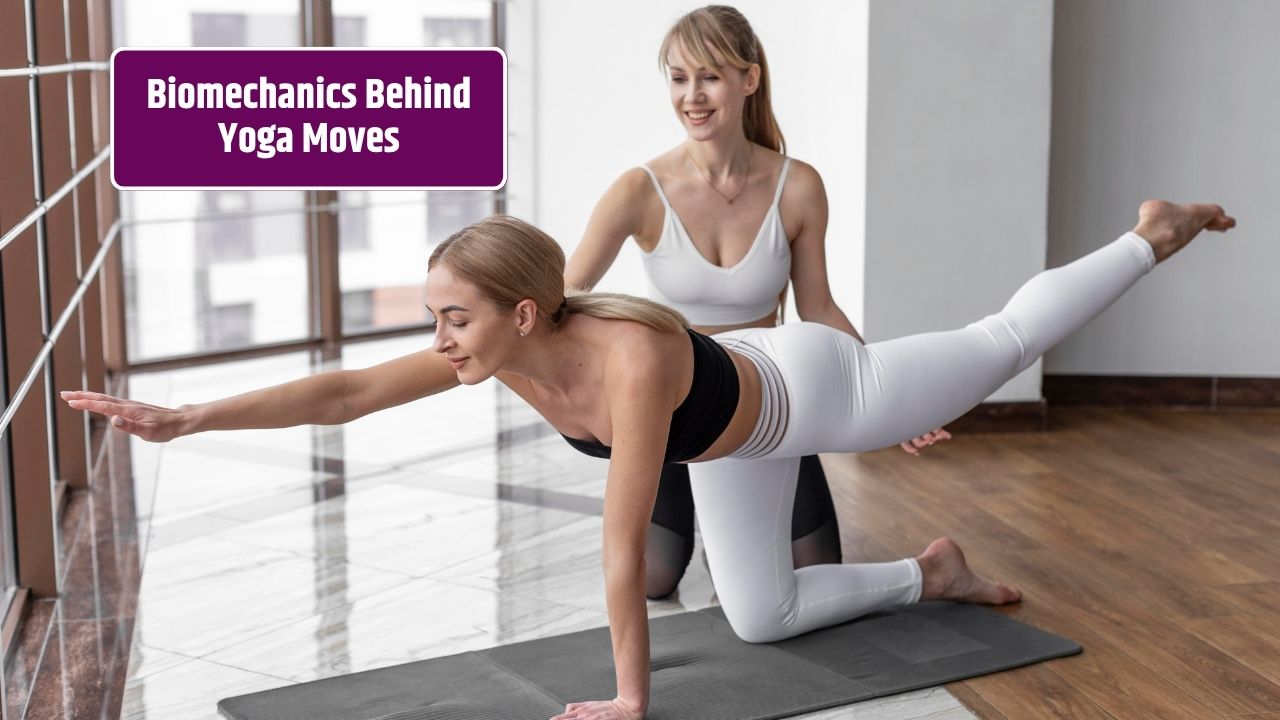
Yoga and Pilates have long been praised for their flexibility and mindfulness benefits—but beneath the surface lies a powerful biomechanical foundation. These movement practices improve posture, alignment, joint health, and muscular balance by targeting the body’s mechanics in both static and dynamic motion.
Whether you’re recovering from injury, aiming to improve performance, or simply want to move better, here’s how Yoga and Pilates enhance your biomechanics from the ground up.
Why Biomechanics Matters in Movement Practices

Biomechanics is the study of how forces interact with the human body during movement. It looks at:
- Joint alignment
- Muscle recruitment
- Movement patterns
- Load distribution
- Stability and mobility balance
Yoga and Pilates, when practiced with proper form, align closely with these principles, helping to optimize function while reducing wear and tear on the joints.
Shared Biomechanical Benefits of Yoga and Pilates
1. Improved Postural Alignment
Both practices emphasize neutral spine, stacked joints, and core engagement—key components of biomechanical efficiency.

Benefit:
- Reduces abnormal joint stress
- Decreases compensatory muscle use
- Enhances movement economy
2. Increased Core Stability
The deep stabilizers—including the transverse abdominis, multifidus, and pelvic floor—are activated in nearly every movement.
Benefit:
- Protects the spine during motion
- Enhances balance and gait
- Promotes better control of limb movement
3. Enhanced Flexibility with Control

Unlike static stretching, Yoga and Pilates build functional flexibility—mobility supported by strength.
Benefit:
- Reduces injury risk
- Improves range of motion without instability
- Facilitates smoother joint movement
4. Balanced Muscle Development
Pilates and Yoga target underused stabilizers and correct overactive prime movers, leading to symmetrical strength and tone.
Benefit:
- Improves kinetic chain coordination
- Prevents muscle imbalances
- Reduces likelihood of overuse injuries
5. Joint Decompression and Mobility
Many poses and movements create traction and space within the joints, particularly in the spine, hips, and shoulders.
Benefit:
- Reduces compressive forces
- Promotes synovial fluid circulation
- Delays degenerative joint changes
6. Mindful Movement and Neuromuscular Control
Both disciplines promote body awareness, controlled breathing, and precision in motion.
Benefit:
- Enhances proprioception
- Refines motor control
- Supports smoother and safer transitions between movements
7. Improved Gait and Functional Movement
Through postural re-education and strengthening of the lower kinetic chain, both Yoga and Pilates positively impact everyday biomechanics like walking, sitting, and lifting.
Benefit:
- More efficient energy use
- Better coordination
- Less joint loading in daily activities
Key Differences in Biomechanical Emphasis
| Feature | Yoga | Pilates |
|---|---|---|
| Focus | Flexibility, balance, and breath awareness | Core strength, alignment, and controlled movement |
| Breathing technique | Deep, nasal breathing (often matched to movement) | Diaphragmatic with core engagement (lateral breath) |
| Joint emphasis | Promotes joint openness and stretch | Focuses on controlled joint stability |
| Movement type | Flowing and static poses | Repetitive and progressive exercises |
| Apparatus use | Bodyweight and props (blocks, straps) | May include equipment (Reformer, Cadillac) |
Table: Biomechanical Benefits by Body Region
| Body Area | Biomechanical Benefit from Yoga & Pilates |
|---|---|
| Spine | Improved alignment, reduced disc compression |
| Shoulders | Increased stability and mobility |
| Hips | Balanced flexibility and glute activation |
| Knees | Enhanced patellar tracking via quad/core synergy |
| Feet/Ankles | Strengthened arches and proprioceptive control |
FAQs
Can Yoga and Pilates fix bad posture?
Yes. They reinforce proper alignment through core engagement, spinal awareness, and repetition of balanced movement.
Which is better for joint pain—Yoga or Pilates?
Both help, but Pilates may be better for those needing more controlled movement and spinal support. Yoga offers gentle mobility for stiff joints.
Are these practices safe for people with injuries?
Yes, especially under the guidance of trained instructors. Modifications can ensure movements respect biomechanical limitations while building strength safely.
Do these practices help prevent injuries?
Absolutely. By improving movement patterns, alignment, and stability, both reduce the risk of overuse and compensatory injuries.