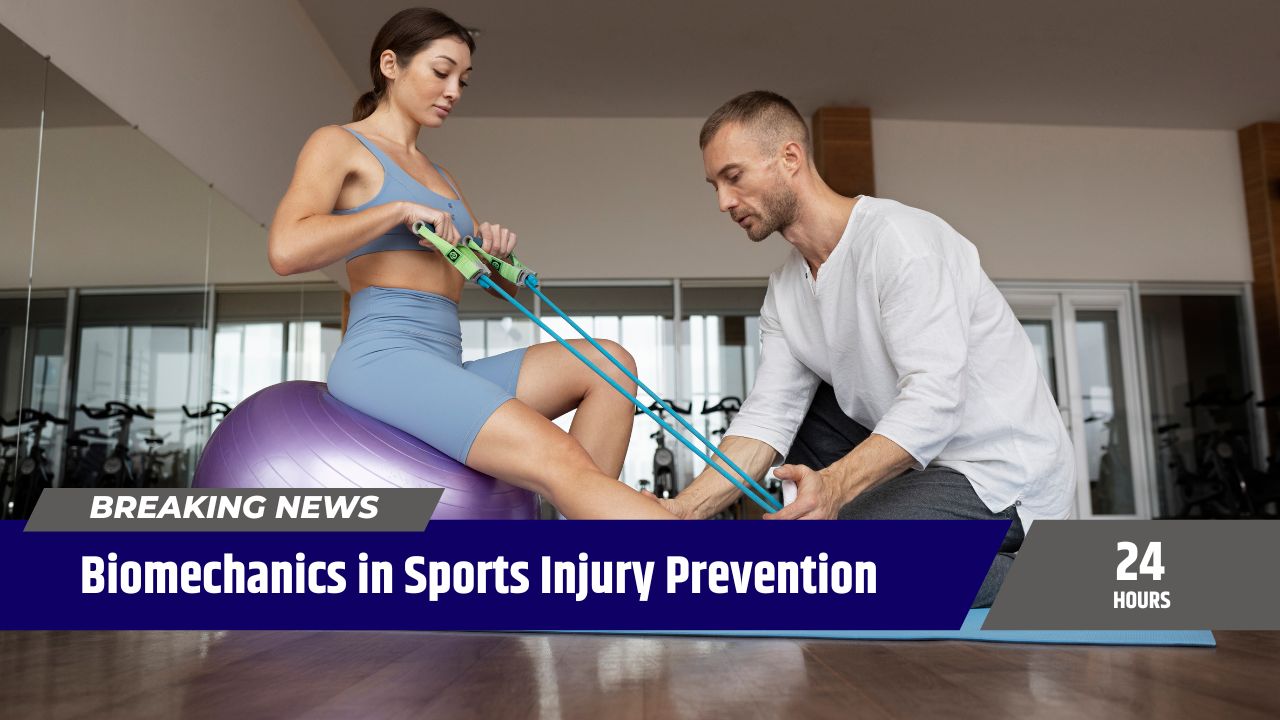
In the world of sports, performance and injury prevention go hand in hand. Athletes, coaches, and medical professionals increasingly rely on biomechanics to understand how the body moves and why injuries happen. By analyzing movement patterns and mechanical forces, biomechanics helps identify risk factors and guide strategies to prevent injuries before they occur.
What Is Sports Biomechanics?
Sports biomechanics is the study of how the body moves during athletic activities. It applies the principles of physics and engineering to analyze motion, force, leverage, balance, and posture during sport-specific actions.

Biomechanical analysis goes beyond just observing movement. It involves collecting detailed data on joint angles, muscle activation, force production, and load distribution—giving a complete picture of how the body performs under stress.
Common Sports Injuries and Their Biomechanical Causes
Many sports injuries are the result of poor mechanics, overuse, or faulty movement patterns. Here are a few examples:
| Injury Type | Common Cause from a Biomechanical View |
|---|---|
| ACL tear (knee) | Poor landing mechanics, weak hip control |
| Shin splints | Improper foot strike, overpronation |
| Tennis elbow | Repetitive strain, poor technique |
| Shoulder impingement | Incorrect arm angles during overhead motion |
| Lower back strain | Faulty posture, weak core, poor lifting form |
Biomechanics allows trainers and therapists to identify risky movements and correct them through targeted intervention.
How Biomechanics Helps Prevent Injuries
1. Motion Analysis and Screening

Using video analysis, 3D motion capture, or wearable sensors, professionals can evaluate how an athlete runs, jumps, lands, or throws. This helps spot biomechanical flaws such as excessive knee valgus, hip instability, or asymmetrical gait—all of which increase injury risk.
2. Customized Training Programs
Biomechanical data allows strength coaches to develop individualized training regimens. For example, if an athlete shows poor hip control while jumping, they can be assigned specific glute and core exercises to correct the imbalance.
3. Technique Correction
Small tweaks in form can make a big difference. By analyzing the angle and timing of movement, biomechanics helps refine techniques in sprinting, swimming, pitching, or lifting to reduce strain and improve efficiency.
4. Load Management

Biomechanical assessments help understand how forces travel through the body. This insight supports better load distribution—especially important in high-impact sports. Coaches can adjust training volume, rest intervals, and movement patterns to avoid overuse injuries.
5. Equipment Optimization
From shoes to braces and custom orthotics, biomechanics is used to evaluate and tailor sports gear to each athlete. Proper footwear or padding can reduce harmful impact and support better alignment during movement.
Real-World Examples of Biomechanics in Injury Prevention
- NFL teams use wearable sensors during practice to monitor joint load and fatigue, helping coaches pull players before an injury happens.
- Olympic sprinters undergo biomechanical gait analysis to minimize hamstring strain risks.
- High school athletes participate in preseason functional movement screenings to identify imbalances and receive corrective plans.
Tools and Technology Used
- 3D motion capture systems
- Force plates to assess ground reaction force
- Electromyography (EMG) to monitor muscle activation
- Wearable trackers for real-time motion data
These tools bring scientific precision to injury prevention efforts, replacing guesswork with measurable data.
FAQs
Can biomechanics prevent all sports injuries?
No, but it can significantly reduce the risk by identifying weaknesses and correcting movements that could lead to injury.
Do amateur athletes benefit from biomechanics?
Absolutely. You don’t need to be a pro—runners, gym-goers, and youth athletes all benefit from movement screening and technique analysis.
Is biomechanics only useful after an injury?
Not at all. Preventive biomechanical assessments are most effective when done before an injury occurs.