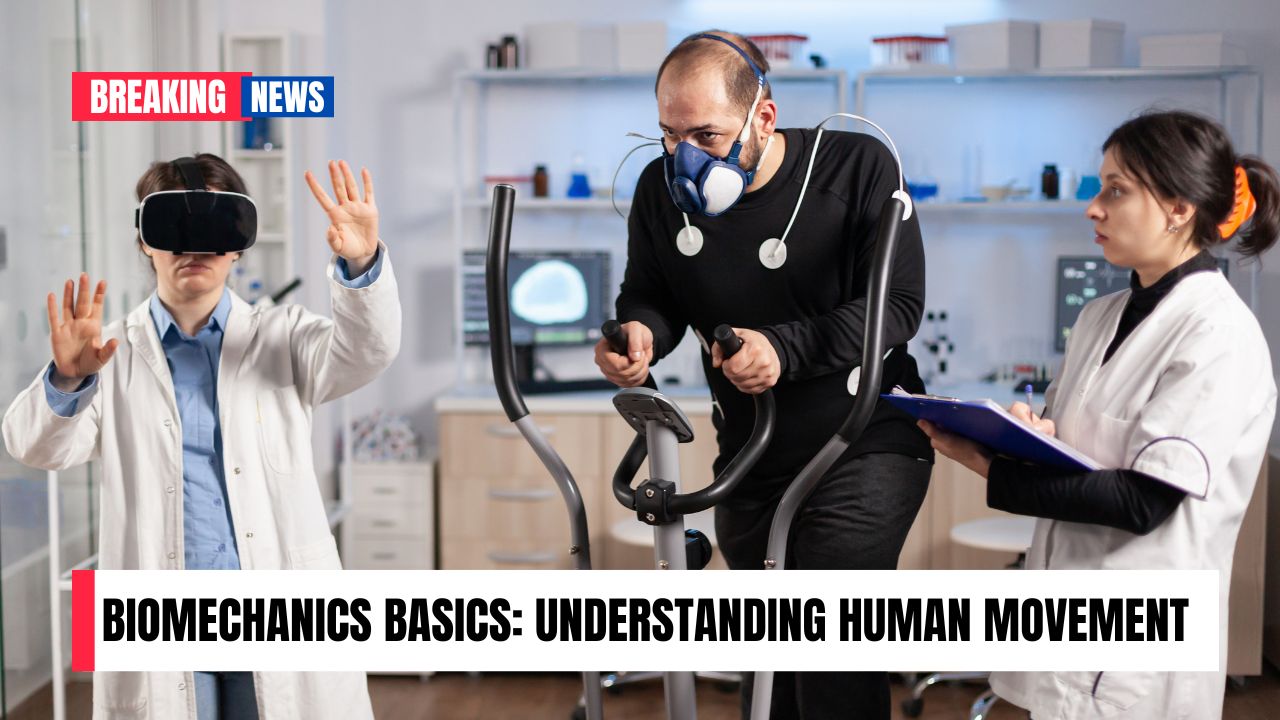
Understanding how the human body moves is a fascinating blend of biology and physics. This is where biomechanics comes in. As a branch of science, biomechanics explores the mechanical principles behind our movements—how muscles, bones, tendons, and ligaments work together to produce motion.
Whether you’re an athlete looking to improve performance, a physical therapist helping patients recover, or just curious about how your body works, biomechanics offers valuable insights.
What Is Biomechanics?

Biomechanics is the study of the structure, function, and motion of the mechanical aspects of biological systems—especially the human body. It combines concepts from physics, engineering, anatomy, and physiology to understand how internal and external forces affect movement.
Essentially, biomechanics helps us answer questions like:
- How do joints and muscles work together to produce motion?
- Why do injuries occur?
- How can movement be optimized for better performance?
Key Areas of Biomechanics
Biomechanics is a broad field with several specialized areas:
1. Kinematics

Kinematics studies motion without considering the forces that cause it. It includes aspects such as speed, velocity, acceleration, and joint angles.
2. Kinetics
Unlike kinematics, kinetics looks at the forces that create or change movement, including gravity, friction, muscle forces, and external loads.
3. Functional Anatomy
This branch focuses on how anatomical structures like muscles, bones, and joints contribute to movement.
4. Sports Biomechanics

This area applies biomechanical principles to improve athletic performance and reduce injury risk. It’s used in training programs, equipment design, and technique analysis.
5. Clinical Biomechanics
Used in rehabilitation and medicine, clinical biomechanics helps assess movement impairments and guide treatments for conditions like arthritis, stroke, or spinal injuries.
Why Biomechanics Matters
Understanding biomechanics has real-world applications across several fields:
| Field | Application of Biomechanics |
|---|---|
| Sports | Technique improvement, injury prevention, equipment design |
| Medicine & Rehab | Injury assessment, prosthetic design, movement analysis |
| Ergonomics | Workplace design, injury prevention, optimizing human-machine interaction |
| Robotics & AI | Designing more natural human-like movements |
| Footwear/Apparel | Developing supportive and efficient shoes and wearables |
Tools Used in Biomechanics
Modern biomechanics uses a range of tools and technology to analyze movement:
- Motion capture systems: Track and record body movement.
- Force plates: Measure the ground reaction forces during activities like walking or jumping.
- EMG (Electromyography): Measures electrical activity of muscles.
- 3D modeling software: Helps visualize and simulate body movement.
Everyday Examples of Biomechanics
You may not realize it, but you apply biomechanics daily:
- Adjusting your posture to reduce back pain.
- Running with better form to prevent knee injuries.
- Lifting heavy objects with proper technique to avoid strain.
How to Get Started in Biomechanics
If you’re interested in diving deeper into biomechanics, consider:
- Studying anatomy and physiology
- Taking physics or engineering fundamentals
- Using fitness tech (e.g., smartwatches or apps that track motion)
- Enrolling in courses on kinesiology, sports science, or physical therapy
Learning biomechanics can be particularly beneficial for professionals in sports, fitness, medicine, and design.
Biomechanics offers a powerful lens for understanding the complexity of human movement. From improving athletic performance to preventing injuries and aiding rehabilitation, the applications are broad and impactful. By combining the science of motion with real-world technology, biomechanics bridges the gap between theory and action.
FAQs
What is the difference between biomechanics and kinesiology?
Kinesiology is the broader study of human movement, while biomechanics is a subfield that focuses specifically on the mechanical aspects of that movement.
Is biomechanics only for athletes?
Not at all. Biomechanics applies to anyone interested in how the body moves—patients recovering from injuries, workers needing ergonomic assessments, or anyone wanting to move more efficiently.
Do you need a science background to study biomechanics?
While a background in biology or physics helps, beginners can start with introductory courses or books that explain the fundamentals in simpler terms.